

William Zepeda Took the Lightweight Crown—and Made a Statement

Zepeda’s championship pressure, Muratalla’s disciplined title defense and the Commonwealth Games produced a weekend filled with real answers.
Opening Bell
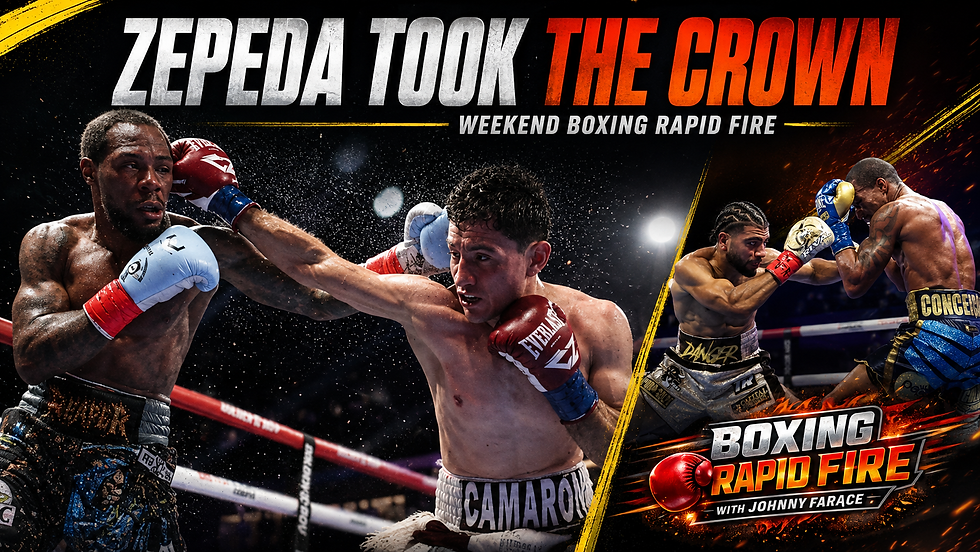
This was a good weekend for boxing because real fighters were placed into meaningful fights.
William Zepeda had to earn a world championship against a skilled, experienced opponent. Raymond Muratalla had to remain disciplined against an awkward former champion. At the Commonwealth Games, young fighters from across the world had only three rounds to establish control and make their work clear.
Nobody needed a fake rivalry or manufactured controversy to make these fights matter.
Good matchmaking created real questions—and the fighters gave us real answers.
Quick Facts
Date: Saturday, August 1, 2026
Location: The Theater at Virgin Hotels Las Vegas
Main event: William Zepeda defeated Lamont Roach Jr.
Title: Vacant WBC lightweight championship
Co-main event: Raymond Muratalla defeated Robson Conceição
Title: IBF lightweight championship
Broadcast: DAZN, TNT and truTV in the United States
Commonwealth Games: Boxing finals concluded in Glasgow, Scotland
Zepeda Defeats Roach and Becomes WBC Champion

William Zepeda defeated Lamont Roach Jr. by unanimous decision to capture the vacant WBC lightweight championship.
The official scores were:
117–111
117–111
118–110
Zepeda improved to 34–1 with 27 knockouts, while Roach fell to 25–2–3.
This was not simply a case of one fighter throwing more punches. Zepeda used his activity to control Roach’s distance, recovery time, ring position and decision-making.
That is the difference between throwing volume and using volume intelligently.
Johnny’s Take: Championship Pressure
Zepeda did exactly what a pressure fighter is supposed to do.
He did not simply walk forward and throw punches. He kept Roach working, repeatedly restarted his offense and refused to give him the extended recovery periods he needed to establish a comfortable rhythm.
Every time Roach defended,
moved or attempted to reset, Zepeda placed another demand on him.
Pressure is not chasing. Pressure is controlling where the opponent can go and how much time he has to think.
Zepeda stepped into range behind his punches, worked the body and maintained his offensive discipline for 12 rounds. He did not admire his first successful combination. He kept finding the next opportunity to work.
The greatest weapon in the fight was not one particular punch. It was the constant demand Zepeda placed on Roach.
That is championship pressure.
Roach Had Moments—But Moments Were Not Enough

Lamont Roach should not be dismissed because of this loss.
He remained composed, attempted to counter and tried to disrupt Zepeda’s rhythm. He did not quit, collapse or stop looking for solutions.
But Roach needed to create more breaks in Zepeda’s offense.
He needed more consistent lateral movement after his counters, more work to the body as Zepeda entered and more physical interruptions inside. Clinching at the right moments, turning Zepeda after exchanges and forcing him to reset could have bought Roach valuable recovery time.
Instead, Roach frequently completed one defensive assignment only to find himself facing the next combination.
Roach had moments, but moments are not enough when the other man controls the majority of every round.
To Roach’s credit, he made no excuses afterward. He acknowledged that Zepeda and his team had the better plan and executed it successfully.
Lamont Roach lost a fight. He did not lose his value as a fighter.
Boxing becomes better when we stop treating one legitimate loss like a career funeral.
The Coaching Lesson: Educated Pressure
Young fighters should study Zepeda’s performance without copying only the punch volume.
The real lessons were underneath the activity:
Step into range behind punches.
Cut off space instead of following.
Attack the body when the opponent moves his head.
Restart after the opponent blocks the first combination.
Maintain balance while applying pressure.
Finish rounds with authority.
Never admire your work.
A pressure fighter who only follows can be turned, countered and walked into traps.
A pressure fighter who controls space begins controlling the opponent’s choices.
What Should Happen Next for Zepeda?

Winning the WBC championship should begin Zepeda’s real work—not begin a safer matchmaking cycle.
Zepeda has earned the right to pursue the best available opponents at lightweight. That means a unification fight, a legitimate leading contender or another matchup capable of moving the division forward.
Zepeda said after the fight that he wants to pursue undisputed status at 135 pounds. That is exactly the mentality a new champion should have.
No future opponent should be presented as confirmed until the promoters and sanctioning bodies make it official. But the direction should be clear:
Give Zepeda meaningful championship progression—not a year-long victory lap.
Muratalla Stays Disciplined Against Conceição
Raymond Muratalla successfully defended his IBF lightweight championship with a wide unanimous decision over former champion Robson Conceição.
The official scores were:
118–110
119–109
119–109
Conceição is not an opponent who makes it easy for another fighter to look organized. His long movements, irregular timing and awkward entries can break an opponent’s rhythm and create messy exchanges.
Muratalla refused to become mentally frustrated.
He remained balanced, patient and responsible with his distance. Instead of forcing a knockout or trying to win every exchange dramatically, he built the victory round by round.
Good fighters look good against opponents who cooperate. Championship fighters must remain organized against opponents who refuse to cooperate.
Muratalla passed that test.
Muratalla’s Lightweight Decision

Following the fight, Muratalla acknowledged that making 135 pounds had become difficult and suggested that a move to junior welterweight may be approaching.
That decision should be made immediately and honestly.
A championship belt is not worth damaging your body to remain in a division that no longer fits you. Making weight is part of boxing, but destroying yourself to make weight eventually destroys your performance too.
Muratalla should not remain at lightweight merely because he holds a championship or because his promotional plan was constructed around it.
If his body can no longer make 135 responsibly, moving to 140 is not weakness. It is a professional career decision.
If he moves, he should move decisively, release the lightweight title without delaying the division and take a proper introductory fight at junior welterweight before challenging its elite.
The Lightweight Division Has Moved Forward
The weekend created greater clarity at 135 pounds.
Zepeda now holds the WBC championship. Muratalla remains the IBF champion, although his future in the division is uncertain.
Promoters and sanctioning bodies should use this moment to produce:
Legitimate unification discussions
Clear mandatory assignments
Meaningful contender fights
Fewer protected championship defenses
An honest determination of who is remaining at 135 pounds
Boxing is at its best when championships create paths toward bigger fights instead of becoming excuses to avoid them.
Commonwealth Games Boxing Delivers Six Golds for India
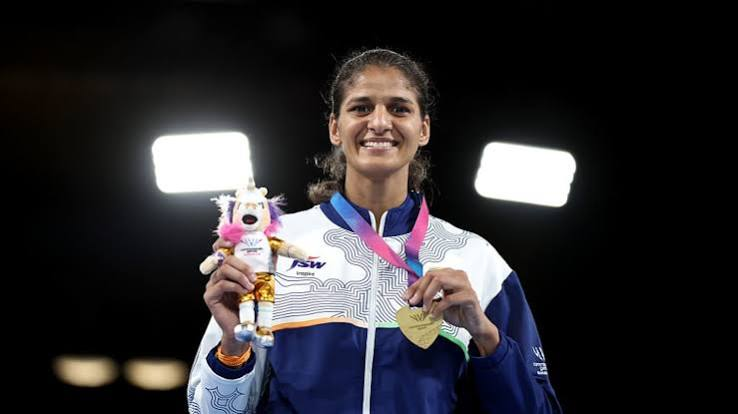
The Commonwealth Games boxing tournament concluded August 1 in Glasgow after featuring 201 boxers from 43 nations.
For the first time in Commonwealth Games history, the boxing tournament achieved full gender parity, with seven men’s divisions and seven women’s divisions. India advanced all 10 of its semifinalists into championship bouts and finished with six boxing gold medals.
One tournament does not guarantee future Olympic dominance. But when a country wins repeatedly across multiple divisions, among both men and women, that indicates more than one gifted fighter.
It indicates a developing system.
That should matter to USA Boxing as Zaur Antia begins influencing the American program. The United States must develop fighters capable of producing clear international scoring—not continually depend on close decisions falling its way.
Tournament Boxing Is a Different Sport
Young boxers must understand that amateur tournament boxing is not simply professional boxing with fewer rounds.
The strategy is different.
Three-round competition demands:
Immediate urgency
Visible scoring
Straight punches
Control of the lead-hand battle
Clean exits
Fast corner adjustments
Emotional discipline
Rapid recovery between tournament days
In a three-round tournament fight, the opening round is not an introduction. It may be one-third of your entire championship opportunity.
There is no time to surrender early rounds, slowly investigate an opponent or absorb unnecessary damage while searching for a dramatic finish.
The work must be clear—and it must begin immediately.
Six Coaching Lessons From the Weekend
1. Pressure Must Remove Recovery
Zepeda did not merely throw punches. He denied Roach the time he needed to reset and regain control.
2. Awkward Opponents Require Patience
Muratalla refused to allow Conceição’s broken rhythm to destroy his own structure.
3. Winning Clearly Matters
Both professional champions left limited room for argument on the official scorecards.
4. The Body Determines the Division
A fighter should not remain at a weight that compromises his health, preparation or performance.
5. Tournament Boxing Requires Immediate Clarity
Commonwealth Games fighters could not afford slow starts or work the judges could not clearly recognize.
6. Real Matchmaking Produces Real Answers
Zepeda–Roach and Muratalla–Conceição revealed more than protected showcase fights ever could.
This Is the Matchmaking Boxing Needs
This is what I want boxing to be.
Put good fighters in with opponents who make them prove something. Zepeda had to solve a skilled world-class boxer. Muratalla had to maintain his discipline against an awkward former champion.
Nobody learns anything from a 30-second knockout over an opponent brought in to lose.
We learned something about both champions this weekend.
We also learned that Roach remains a legitimate world-class fighter and that Conceição can still force quality opponents to solve difficult technical problems.
A loss should provide information—not automatically make a fighter disposable.
Boxing’s Shared Broadcast Experiment
The Las Vegas card was distributed through DAZN, TNT and truTV in the United States, demonstrating what can happen when networks and promotional interests cooperate.
Shared distribution can expand access. Promotional cooperation can also help create better matchmaking.
Boxing still needs greater consistency, however. Fans should not require a collection of subscriptions and a detective’s notebook to determine where every major fight can be watched.
The fights belong in front of the largest realistic audience.
What Happens Next?
William Zepeda
Pursue the most meaningful available championship fight. Prioritize unification or a true leading contender rather than a prolonged series of safe defenses.
Lamont Roach Jr.
Return against a credible ranked opponent. Do not bury him in meaningless rebuilding fights. His skill remains world-class.
Raymond Muratalla
Determine whether making 135 pounds remains physically responsible. If it does not, move decisively to 140 and begin building toward the division’s elite.
Robson Conceição
Honestly evaluate whether another championship run is realistic. He remains technically difficult, but his age and accumulated championship mileage must be considered.
Final Bell

This weekend was good for boxing because the fights answered real questions.
William Zepeda proved that his pressure can operate at a championship level. Raymond Muratalla proved that he can remain disciplined against a difficult veteran. The Commonwealth Games reminded us that clear scoring, strong national systems and immediate adjustment remain essential in elite tournament boxing.
Not every fight needs a scandal.
Not every card needs manufactured disrespect.
Not every fighter needs an undefeated record.
Sometimes boxing only needs good fighters placed in meaningful fights.
That is how champions develop.
That is how divisions move forward.
That is how the sport earns the fans’ trust.
Good boxing does not protect everybody’s record. Good boxing gives fighters an honest chance to prove who they are.


Comments